The diffractive beam splitter is used with monochromatic light such as a laser beam, and is designed for a specific wavelength and angle of separation between output beams.OverviewA beam splitter or beamsplitter is an that splits a beam of into a transmitted and a reflected beam. It is a crucial part of many optical experimental and measurement systems, such as. In its most common form, a cube, a beam splitter is made from two triangular glass which are glued together at their base using polyester,, or urethane-based adhesives. (Before these synthetic,. Beam splitters are sometimes used to recombine beams of light, as in a. In this case there are two incoming beams, and potentially two outgoing beams. But the amplitudes.
[PDF]

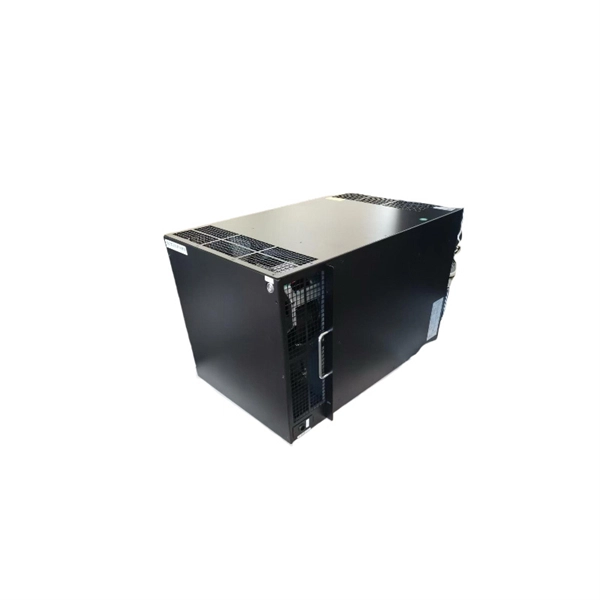
Preferred choice for small- and medium-sized DCs, integrating power supply and distribution, cooling, rack, contained aisle, and monitoring systems to realize one DC per module. 0 serves as a solid digital foundation for NEFU in building a teaching paradigm driven by ecological big data. Matrix NAP Info chose Huawei's FusionModule2000 smart modular data center solution. This solution not only achieves lower carbon emissions and higher. Huawei has recently organized the Data Center Policy and New Product launch conference. Alongside the essential policies for partners, Huawei has unveiled the smart micro-module 6. 0 and some battery solutions. All parts are prefabricated, pre-installed, and pre-tested. The FusionModule500 features a monitoring function with web interface that can. Information explosion means sharp increase of data. According to GCI index, it is estimated that there will be more than 100 billions connectivity globally by the year 2025. More than 180ZB data will be transmitted, computed and stored on internet. How to ensure the reliability, security and high. At the Digital Energy China Tour 2020, Huawei released a new generation modular data center - Smart Micro-module 5. 0 uses its self-developed smart lithium battery (SmartLi battery) to achieve a full lithium battery backup. The smart micro-module 5.
[PDF]
PAM4 is a modulation scheme that combines two bits into a single symbol with four amplitude levels as shown in Fig. This effectively doubles a network's data rate, enabling 400G/800G short-haul transmission. NRZ, or Non-Return-to-Zero signaling, represents binary information using two distinct signal levels: This creates relatively wide signal separation between logical states. As a result, NRZ systems historically provided: This operational tolerance helped earlier architectures remain relatively. PAM4 is a branch of the pulse amplitude modulation (PAM) technology, which is a mainstream signal transmission technology following non-return-to-zero (NRZ). Playing a key role in multi-order modulation, PAM is widely used in high-speed signal interconnection. Figure 1-1 shows the typical waveform. A key new modulation scheme, PAM4, was introduced around 2017 and enabled the big jump from 100G to 400G. When it comes to enabling 400G and higher Ethernet speeds, a four-level pulse amplitude modulation or PAM4 multilevel signaling is needed as opposed to the non-return-to-zero (NRZ) modulation.
[PDF]

Featured with transmitting and receiving signals over a single strand of fiber, 40G and 100G BiDi transceivers have emerged as a cost-effective solution for fiber optical cable utilization and data center deployment. These two BiDi transceivers will be described in. This guide explains how bidirectional communication works in the 100G Ethernet standard to effectively double the density of your existing fiber strands. Moving to 100GbE does not have to mean a complete infrastructure overhaul. Bidirectional fiber delivers multiple practical benefits to 100G. 100G BIDI QSFP28 optical transceiver uses the wavelengths of TX1304nm/RX1309nm with PAM4 signals for up to 40km transmission over single-mode fiber. The module supports 103. 25Gb/s with PAM4 lane signaling data rate with a simplex LC connector using the QSFP28 footprint. 25Gb/s electrical-to-optical. The Cisco 100GBASE Quad Small Form-Factor Pluggable (QSFP) portfolio offers customers a wide variety of high-density and low-power 100 Gigabit Ethernet connectivity options for data center, high-performance computing networks, enterprise core and distribution layers, and service provider. However, with multiple module types—such as SR4, LR4, CWDM4, and ZR4 —each optimized for different distances, fiber types, and network architectures, selecting the right 100G QSFP28 transceiver can be challenging. The module incorporates one channel optical signal and operates on 1271nm and 1331nm wavelength.
[PDF]

Filter your results below. The Marvell® PAM4 optical DSP portfolio, including Spica™ and Nova™ DSPs, addresses the critical the need for high-bandwidth optical interconnects to power AI infrastructure. Marvell leads the pluggable module ecosystem with low-power, high-performance silicon for AI, cloud, enterprise and 5G. MaxLinear's highly integrated PAM4 DSPs offer superior link-margin performance and low power to enable 100G, 400G, 800G, and 1. 6T optical interconnects inside the data center. DCP-M is a genuine open line DWDM platform, specifically engineered for contemporary DCI. While it possesses the form factor and user-friendliness of a passive multiplexer, DCP-M stands out by actively monitoring traffic, amplifying signals for extended distances, and accommodating higher data rate. In this context, the 100G DWDM PAM4 optical module, which combines the advantages of PAM4 modulation and DWDM technology, becomes an ideal solution. This article will explore the definition, features, advantages, application scenarios, and FS product highlights of 100G PAM4 DWDM optical modules. Watertown, CT – The Siemon Company, a global leader in high‑performance network infrastructure solutions for data centers and smart buildings, is proud to announce the launch of its portfolio of 200G, 400G, and 800G PAM4 high‑speed optical transceivers, expanding Siemon's end‑to‑end data center. DCP-M is a true open line DWDM platform designed specifically for modern DCI.
[PDF]